
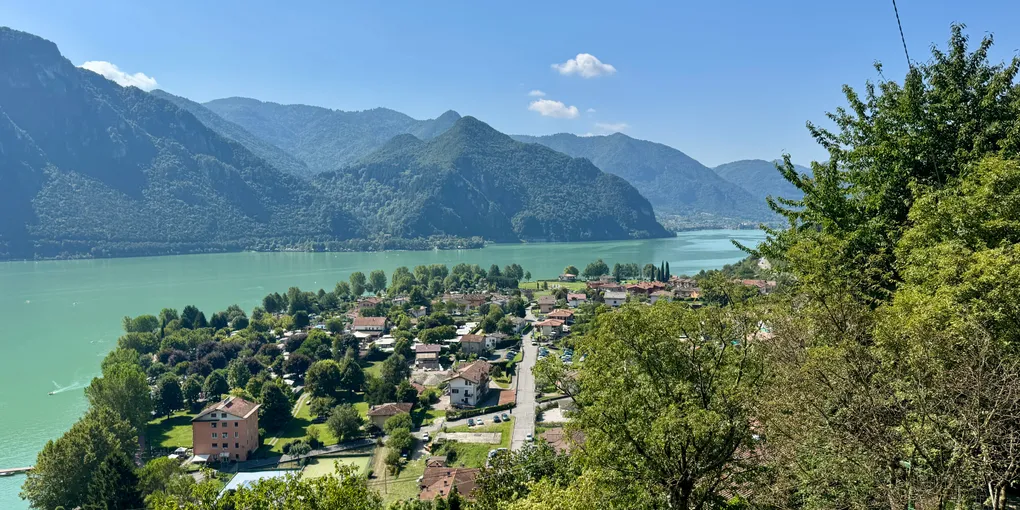
Lago d'Idro: Italy's Forgotten Lake
Everyone’s heard of Garda. A fair few have discovered Iseo. But mention Lago d’Idro and you’re mostly met with a blank stare — even from people who holiday in Italy every year. Which, frankly, suits me fine.
We arrived here on the back end of a road trip from Mont Blanc, breaking the journey with an overnight stop near Novara before dropping down into Lombardy. Idro sits quietly between its two more famous neighbours, considerably smaller than both and a great deal quieter. If Garda is the lake everyone photographs and Iseo is the one everyone’s started talking about, Idro is the one nobody’s got round to mentioning yet.
We based ourselves at Camping Pilu in Anfo, a sleepy village on the western shore, and spent the best part of a week finding out exactly why that is — and whether “forgotten” is doing this place a disservice.
Where to stay
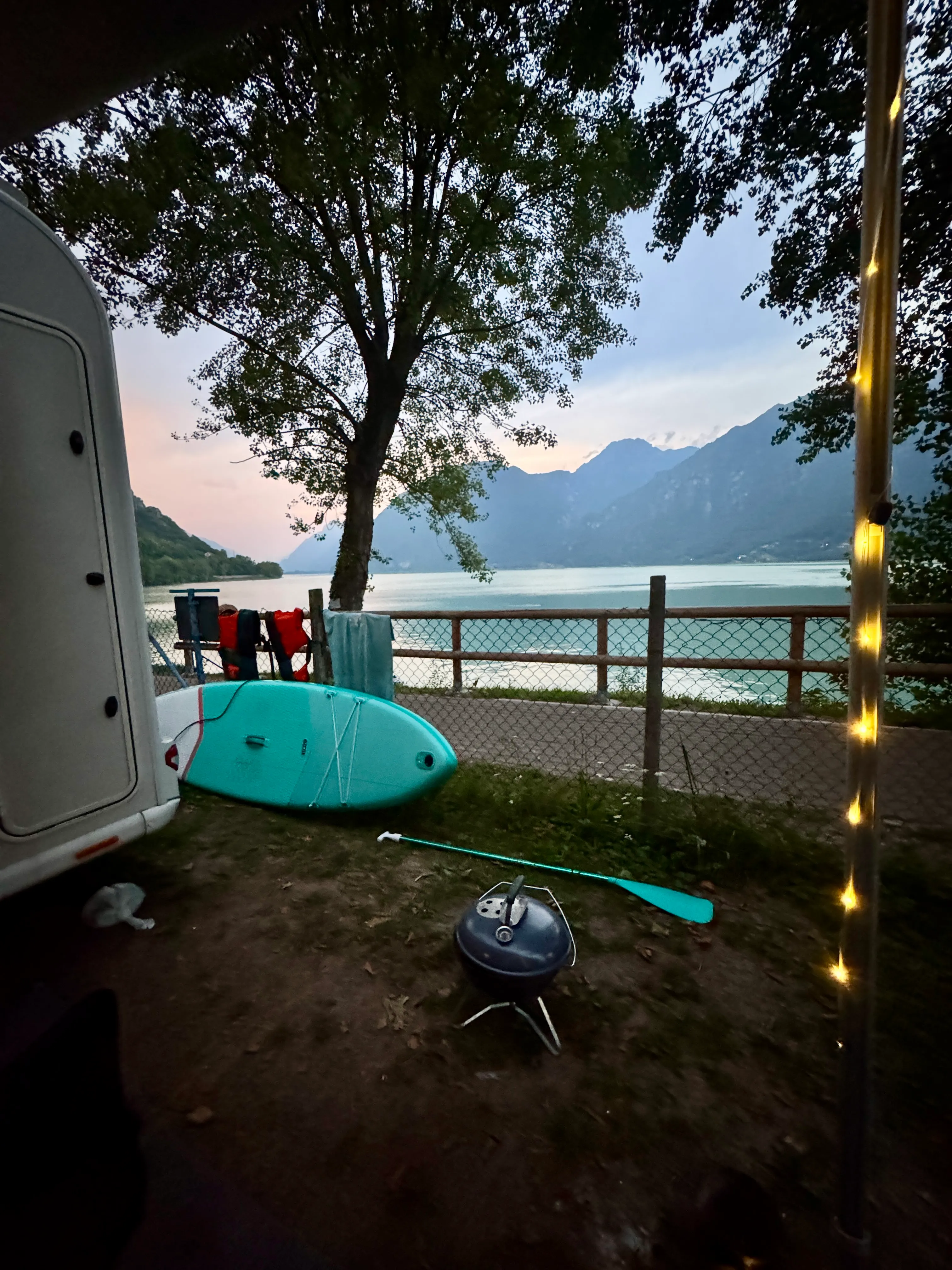
Anfo isn’t a place you come to for five-star luxury — if that’s what you’re after, Garda’s shoreline is close enough for a day trip. What Anfo does have is a handful of genuinely lovely, low-key options:
- Camping Pilu — where we stayed, and where I’d happily go back. Family-friendly, with a grocery shop, play area, and a restaurant/bar that puts real effort into evening entertainment and live music. Bungalows and pitches are both available. We booked early in the year and still only just secured the last lakeside pitch, so if a waterside spot matters to you, get in early.
- Lago Idro Glamping Boutique — for anyone wanting the outdoors without giving up their creature comforts. Around 200 metres from the town centre.
- Albergo al Lago — a beachfront hotel with romantic lake views, an Italian restaurant, and a lush garden. About as close to romantic as Anfo gets.
- B&B Re Perone — cosy rooms and consistently excellent reviews for local hospitality.
- Garden View Bed & Breakfast — a 3-star option about 1.1km back from the lake, with private parking and small in-room kitchens.
Getting around and getting your bearings
Anfo sits on the western shore of Lake Idro, west of Garda, right beside the 16th-century fortress of Rocca d’Anfo (more on that below). The nearest airport is Verona’s Villafranca, roughly 105km east — budget a good hour and a half’s drive. Public transport is thin on the ground here, so you’ll want your own car. A small ferry does run across to the other villages on the lake if you fancy exploring further afield without driving round.
If you’re camping, do your big shop before you get here. There’s no supermarket within walking distance, and Anfo itself has surprisingly few shops for an Italian village — more on that later.
Hiking around Lake Idro
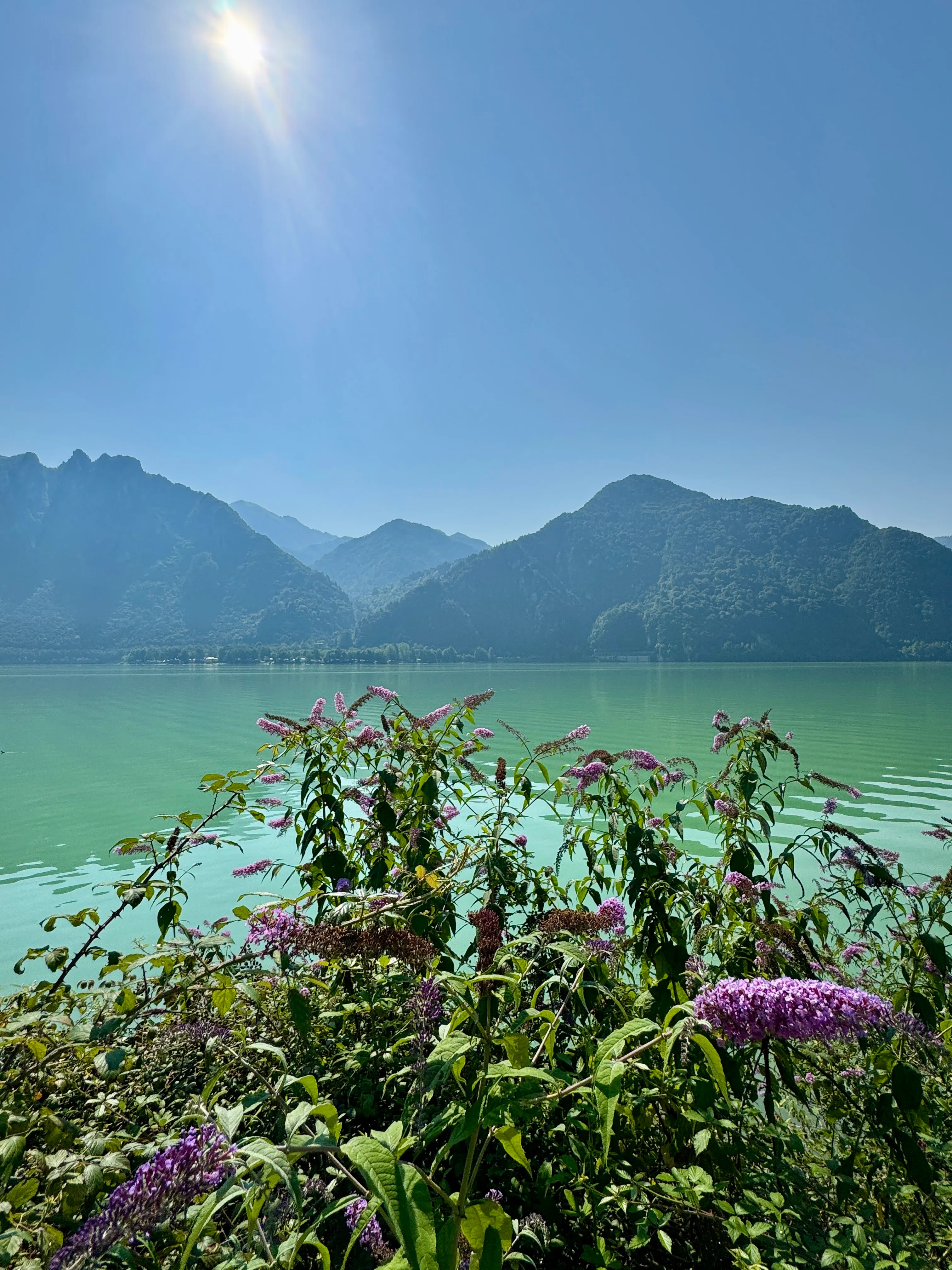
We visited in August, which — spoiler — is not the month for serious hiking here. The heat had us keeping things short: a handful of gentle climbs to viewpoints above the village, done early or late in the day with plenty of water on hand. If hiking is the main event of your trip rather than a nice extra, come in spring or autumn instead.
That said, the area has serious walking credentials if you time it right. There are over 30 marked trails around Anfo, ranging from easy lakeside strolls to proper mountain ascents, with Lake Idro as the constant backdrop. A few worth knowing about:
- Monte Paghera summit trail — a moderate ridge walk from the Chiesa di Santa Petronilla, around 6km, climbing through pine forest to a summit with views straight down over the lake.
- Santa Petronilla to Coca Chetoi — the most popular route in the area, roughly 6.4km, taking in waterfalls along the way.
- Lake Idro Ring Tour — for the more ambitious, a 20km+ circuit around the lake with well over 1,500m of elevation gain. Not one for a hot afternoon.
Whichever you pick, this is proper mountain territory rather than gentle lakeside ambling, so decent boots and a real water supply are non-negotiable.
Rocca d’Anfo
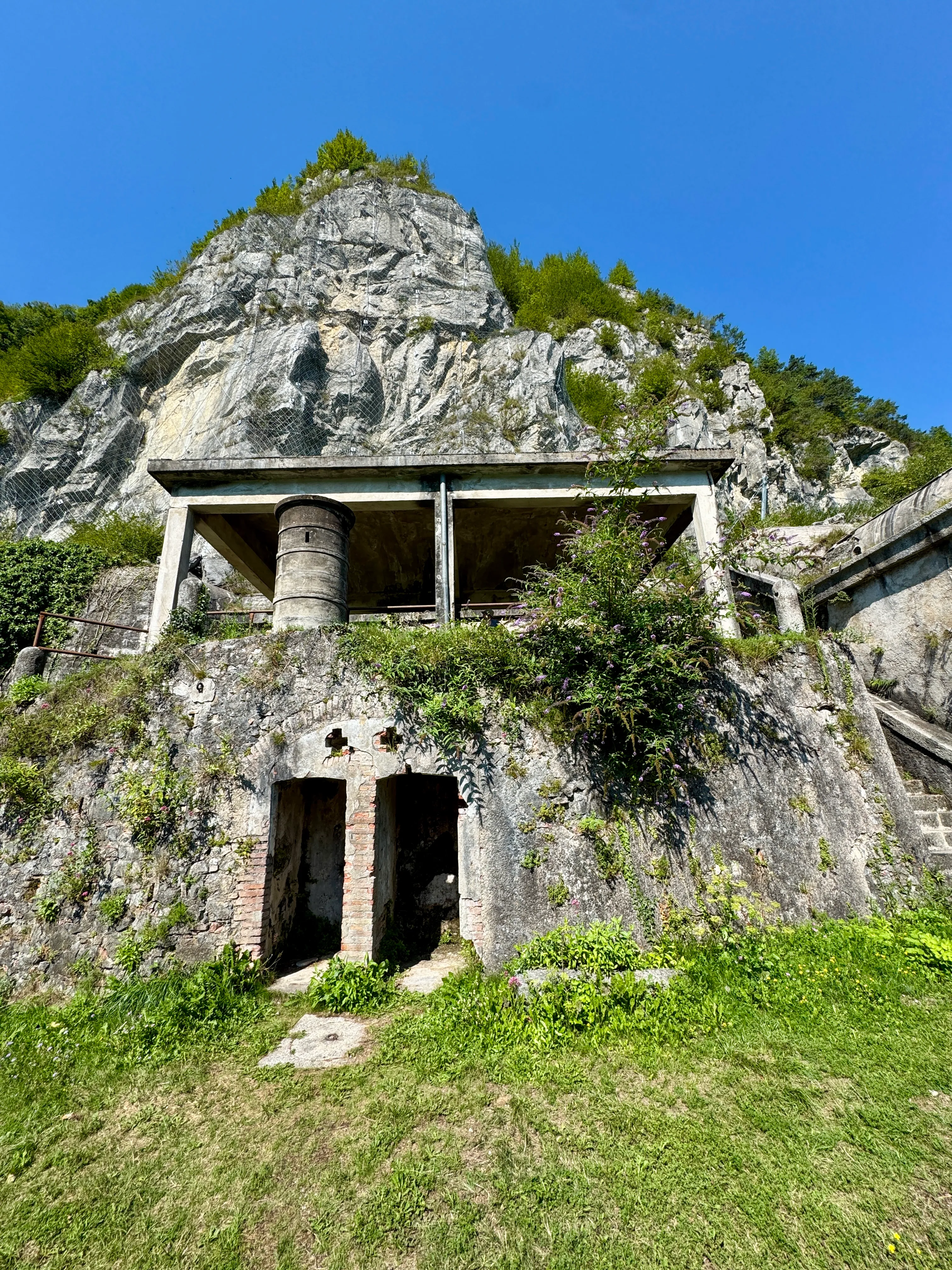
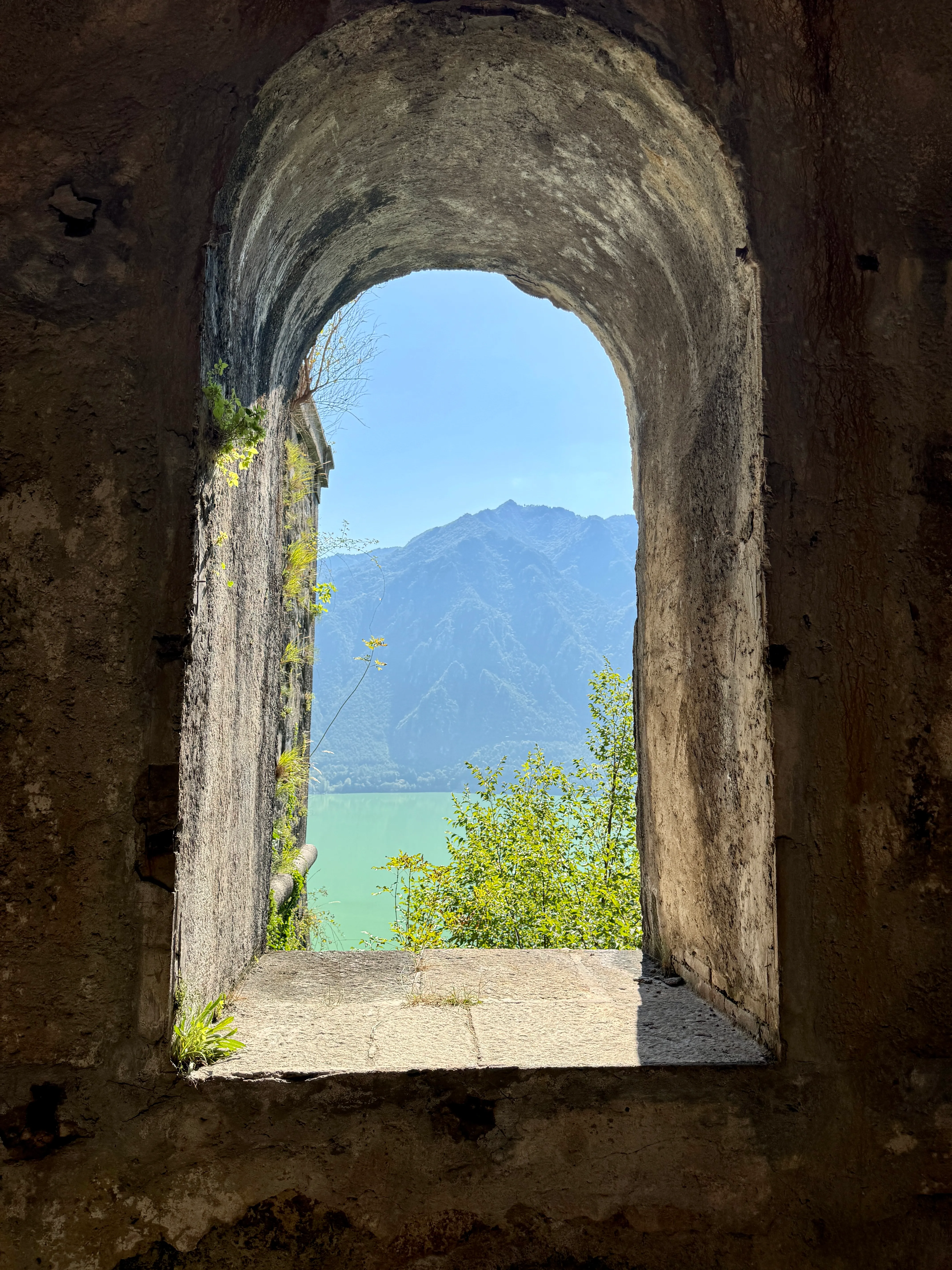
This is the historic heart of the area, and thoroughly worth your time. Rocca d’Anfo is a military fortress that started life under the Venetian Republic in the 15th century, built into the eastern slope of Mount Censo overlooking the lake, and was later expanded considerably under Napoleon in the early 1800s.
From Camping Pilu, the lower part of the fortress was about a ten-minute walk along the lake — close enough that it became our regular cooler-evening dog walk with Fred. The kids loved having the old fort walls and grassy ramparts to run around on. We also paid to go through to the upper sections, which I’d genuinely recommend: more history, and even better views.
As of 2026, the fortress reopens for the season on 3 April and runs through to the end of October. There are a few ways to visit:
- Napoleonic Tour (guided, around 4 hours, the full site) — €15 adult / €6 child (5–15)
- “Dalla Serenissima al Regno d’Italia” Tour (guided, around 2.5 hours, the Venetian section and Batteria Tirolo) — €12 adult / €5 child
- Self-guided short route (roughly 2km, on your own) — €2 flat ticket
- Children under 5 go free
Guided tours run in English through the summer months. Booking ahead is recommended, particularly for the longer tours — details are on the official Rocca d’Anfo website.
Watersports
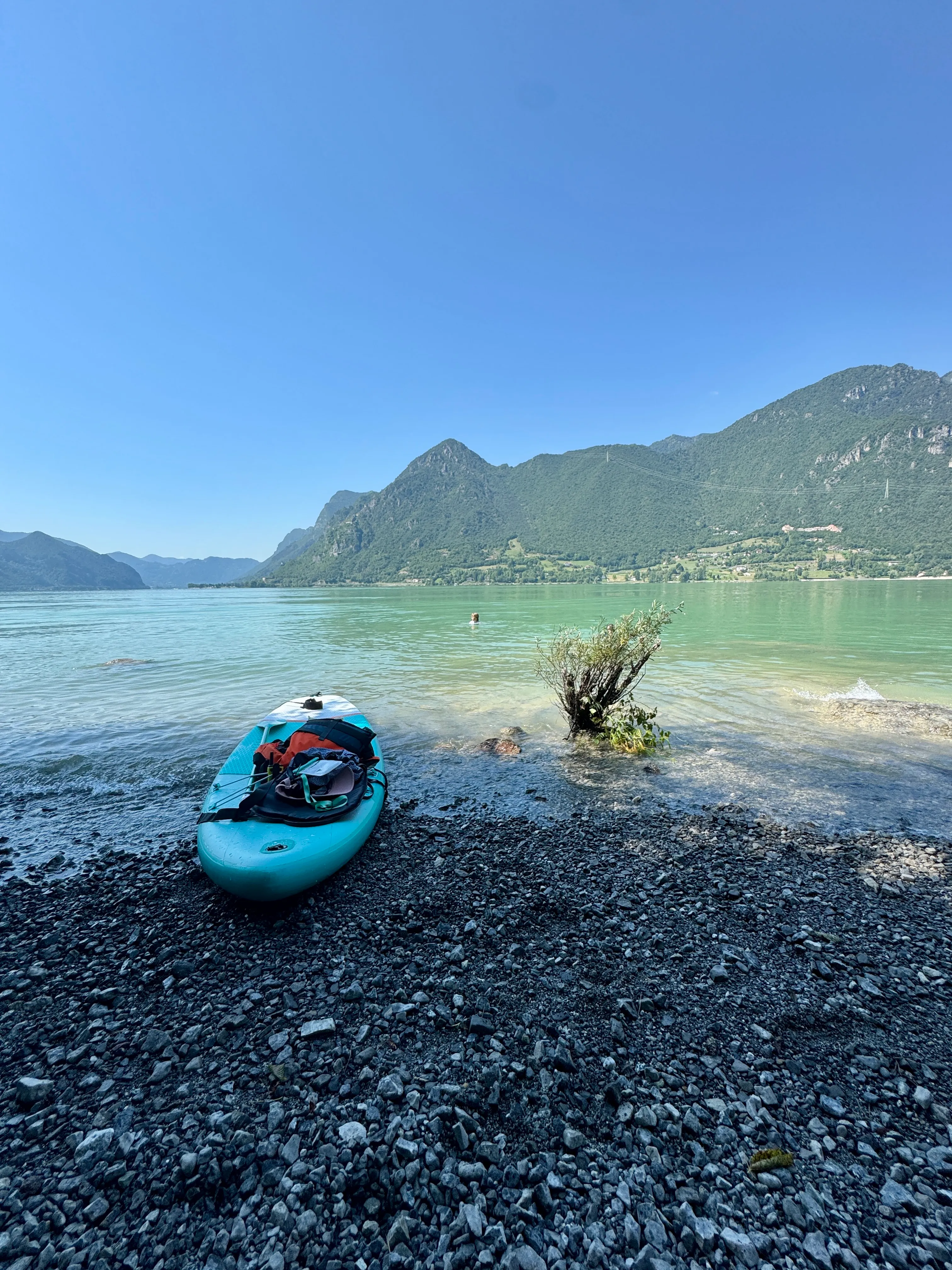
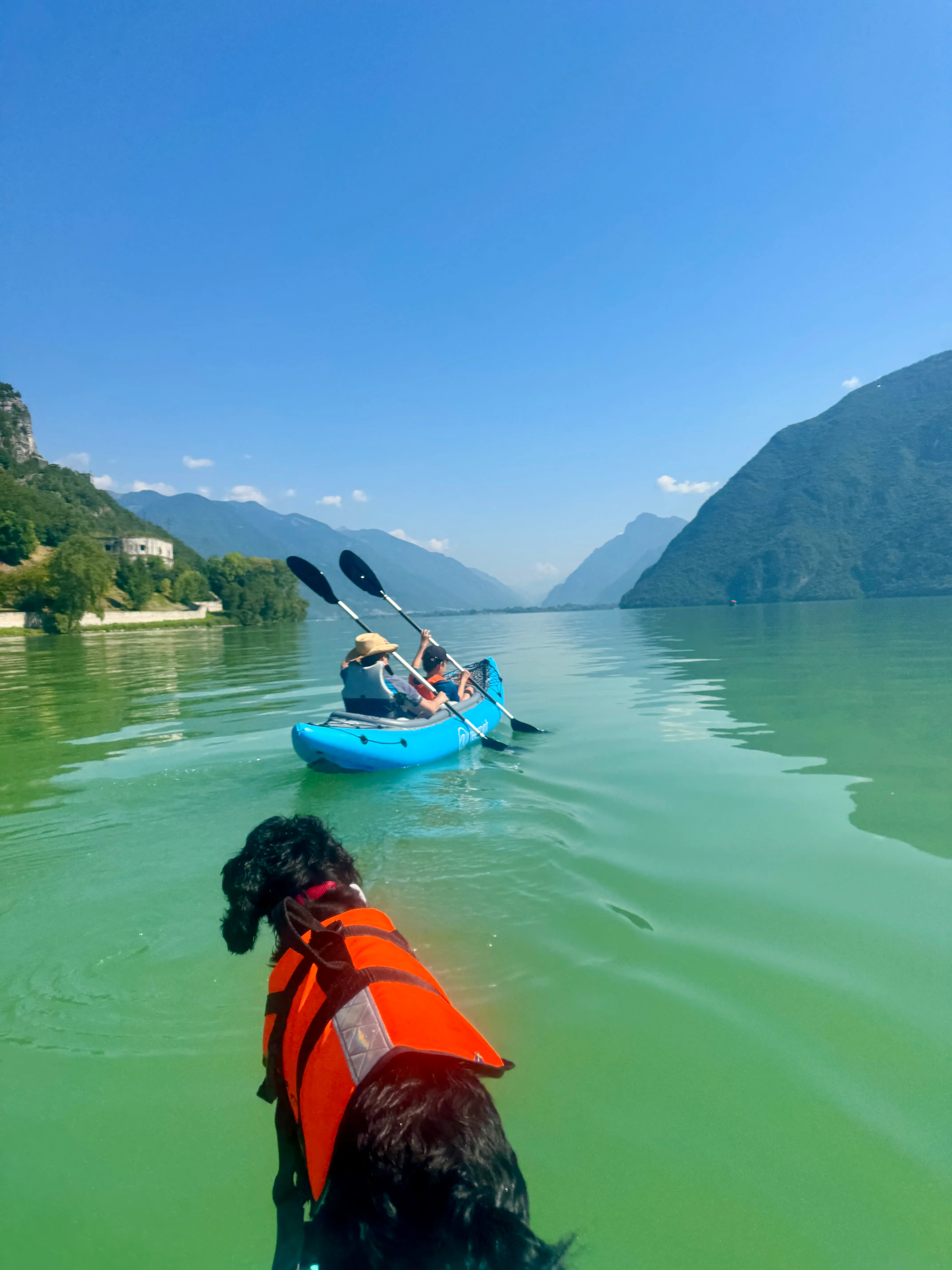
Paddleboarding and kayaking are the main event on the water here, with hire available if you haven’t brought your own, plus small boats for those who’d rather not paddle themselves. The lake is small enough that confident paddlers can cross to the far side — just check the wind forecast before you set off, it can pick up more than you’d expect.
Fred, naturally, came too. He’s a keen paddleboarder — if nothing else, a board turns out to be an excellent way of creeping up on unsuspecting ducks (no ducks were harmed in the making of Fred’s watersports career, I should add). We found a lovely, almost entirely secluded beach on the far shore for a picnic and a swim, which was one of the highlights of the week. The paddle back was considerably harder work once the wind got up — I’m counting it as my arm workout for the week and moving on.
Where to eat
Options are limited — this is a very small village, not a food destination. The good news for anyone travelling with a four-legged companion: every place we ate was happily dog-friendly, so Fred did his tour of the village too, stationed hopefully under the table waiting for a slice of pepperoni to magically slide off someone’s pizza. The lakeside B&Bs and hotels have their own restaurants, and we had a genuinely good, reasonably priced pizza at La Boa.
We also tried Ristorante Imbarcadero at the other end of the village, which looks smarter, with decking over the lake. We had steak and a carafe of house red, and — honestly — it wasn’t bad, but it didn’t justify the price tag either. Nothing was wrong with it, but for value for money, La Boa is where I’d send you.
Should you go?
Idro is a beautiful, genuinely peaceful lakeside spot, and Camping Pilu in particular makes a real effort to bring some evening energy to what is otherwise a very quiet village. That quietness has a flip side, though: Anfo has a slightly abandoned feel to it, without the bakeries, butchers, and little shops you’d expect to find in most Italian villages. It seems to be a deeply seasonal place, and I suspect the locals do their shopping elsewhere.
Come prepared — with supplies, and with realistic expectations about nightlife and choice — and this is a lovely, uncrowded corner of Lombardy with enough to fill the best part of a week. Just don’t come expecting Garda with fewer people. It’s its own, quieter thing entirely.
Have you found your own “forgotten” lake in Italy? I’d love to hear about it — come say hello over on Pinterest.