
Lake Brienz, Switzerland: Things to Do, Where to Stay and a Motorhome Guide
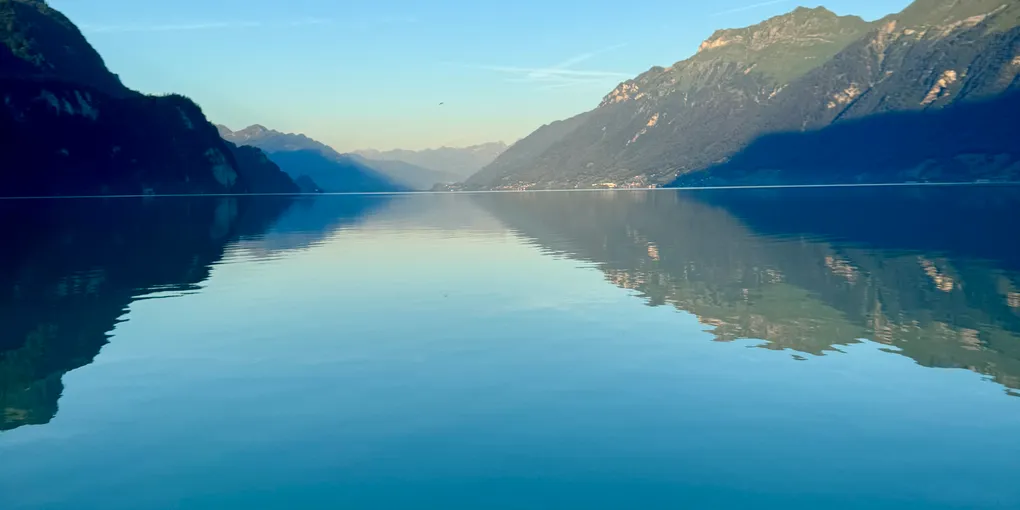
We’d been at Lake Brienz a few days by the time the evening storm hit. We were pitched up at a lakeside campsite with the kids and Fred, properly settled in — awning out, swim towels strung up to dry, chairs spread around the way they get when you’ve stopped somewhere long enough to make it home. Most of the week the lake was exactly what you picture when you book a Swiss lake in August: flat, calm and serene, the water like glass for hours at a stretch. That evening started the same way — completely still, the sun going down behind the mountains opposite and turning the surface gold, a pair of swans drifting past.
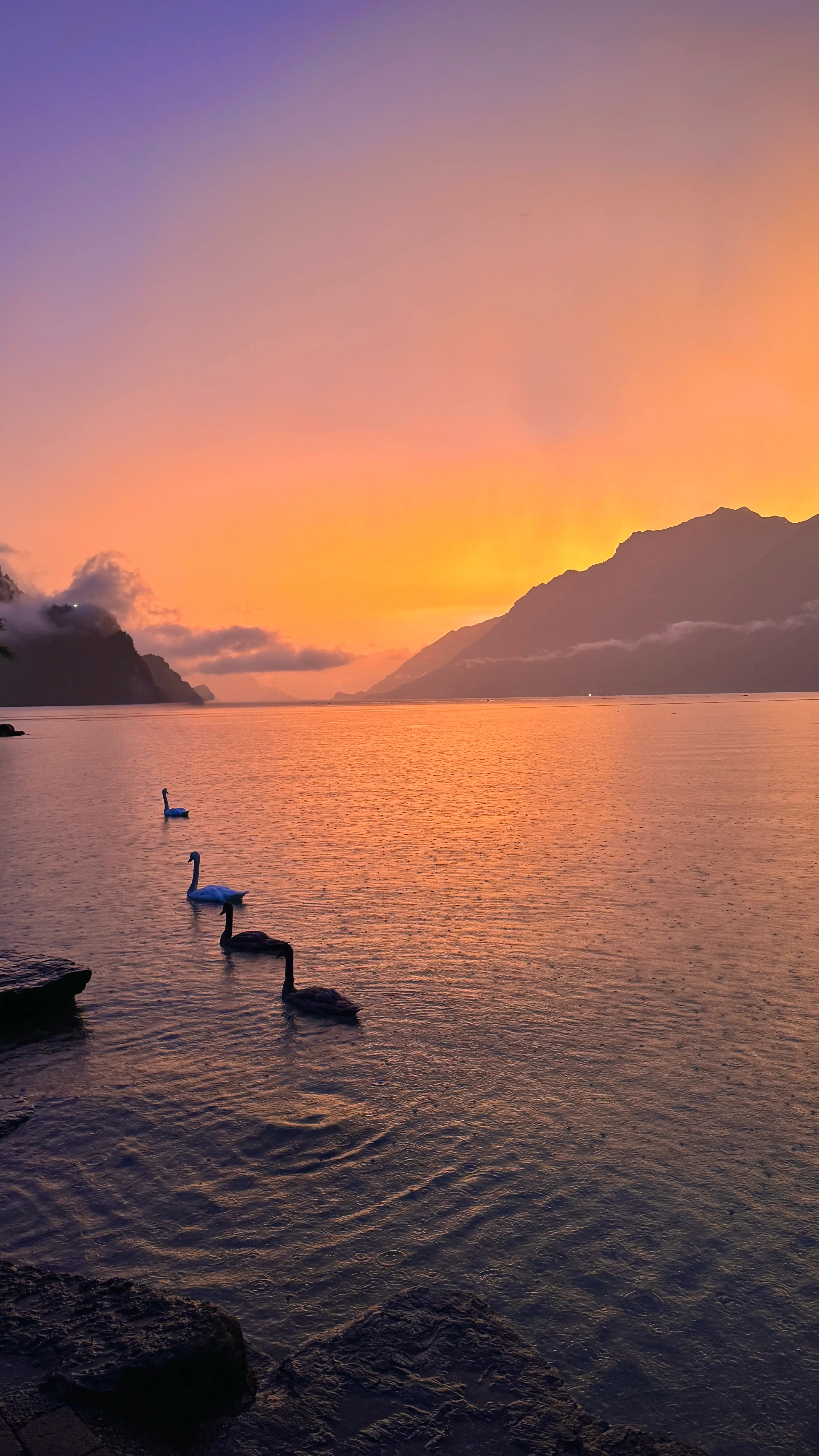
Then it started to rain. Just a few drops at first, dimpling the water. Within about half an hour the wind had picked up, the lake had turned to chop, and we were winding the awning in at speed and chasing chairs and half-dry swim towels across the pitch. The whole campsite was doing the same — a campsite’s worth of people performing the same frantic ballet in the rain, nobody making eye contact. We ended up sitting it out inside the motorhome, watching the rain hit the windows sideways and listening to thunder roll round the valley.
We had a table booked at the site restaurant, twenty metres away. I’d had my heart set on a fondue all day, and I’m not proud to report that no amount of biblical weather was going to come between me and a pot of melted cheese, so we waded through ankle-deep water to get there. It was worth it. What I didn’t know, eating that fondue, was how bad things were getting on the far shore.
What actually happened that night
This was the storm of 12 August 2024, and the Bernese Oberland took the worst of it. In Brienz village, on the opposite side of the lake, a small mountain stream called the Milibach burst its banks at around half past six in the evening and sent rock, boulders and timber down through the middle of the village. Roughly seventy people were evacuated. Cars, buildings and roads were damaged, the lake boat landing was put out of action, and the railway line through the village was badly hit.
The historic Brienz Rothorn steam railway came off worst of all — enough track and infrastructure was destroyed that they closed it for the rest of that season, with repairs running to several million francs.
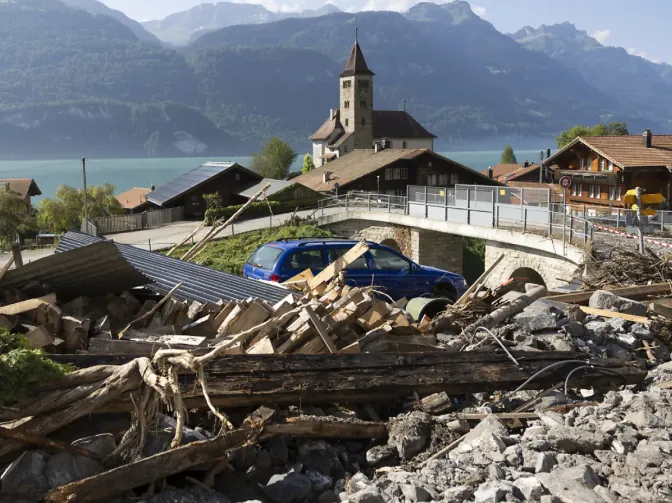
This was not a normal night in Brienz. It was the worst storm the area had seen since the major floods of 2005, nearly twenty years earlier — and the village had spent the years in between building defenses specifically to stop it happening again. So please don’t read this and picture Lake Brienz as some perpetually storm-lashed place. It isn’t. The vast majority of the time it’s exactly the calm, glassy lake we pulled up to.
The morning after was strange. The lake was covered in debris — branches, planks, all sorts washed down off the slopes. A few of us from the campsite grabbed our paddleboards and spent a good while out on the water dragging it into piles to be collected. It felt fairly futile against the amount of it, but it’s not every day you use a paddleboard as a clean-up barge alongside a load of strangers, and it’s one of the things I remember most from that trip.
Mountain weather turns fast. A flat, golden lake at sunset tells you nothing about the next couple of hours, and that’s the one thing worth remembering before you head to the Alps.
The practical bit: weather and a motorhome in the Alps
Alpine valleys funnel storms, and they build quickly on hot afternoons. A few things we now do without thinking:
Check MeteoSwiss (the official forecast) every morning rather than relying on a generic weather app — it’s far better on local thunderstorm risk. And if a storm is coming, get the awning in early. Awnings are the first thing to go. Down by the lake in summer you don’t need to worry much about the cold — mid-August evenings stay warm — but if you’re heading up to higher altitudes it’s a different story, so pack a layer for the mountains even if you’re in shorts by the water.
If you’re bringing a motorhome over, two charges to know about. Vehicles up to 3.5 tons need a motorway vignette. Anything over 3.5 tons — which covers a lot of coach-builts, including ours at 7.5 metres — falls under the LSVA, Switzerland’s heavy vehicle charge, instead. We always sort ours well in advance, and I’d recommend you do the same — Swiss drivers have considerably less patience than the French, and you don’t want to be the reason for the flashing lights at the border.
Worth booking lakeside pitches ahead in July and August too. The good sites by the water fill up early, and not all of them take longer vehicles, so it’s worth a quick phone call rather than turning up and hoping.
When to go
Late spring and early autumn (May–June and September) are the sweet spot: the campsites are open, the weather’s usually settled, and it’s quieter and cheaper than peak summer. July and August are gorgeous but busy, and that’s also peak thunderstorm season — not a reason to stay away, just a reason to keep an eye on the sky.
Where to stay
We stayed right on the water at the eastern end of the lake near Brienz, and if you want that wake-up-and-step-onto-the-shore setup, Camping Aaregg is the obvious pick. It sits on a little peninsula with the mountains across the water, has proper lakeside pitches, a restaurant on site, and you can swim, paddleboard or launch a canoe straight off the campsite. It’s pricier than the basic sites but you’re paying for the position.
It’s also very dog-friendly, as is the whole area — no surprise in Switzerland, but worth saying if you’re travelling with one. Fred came everywhere with us. Behind the campsite there are lovely forest walks following streams and rivers, with views opening out over the lake as you climb. Easy to do a loop before breakfast and have it more or less to yourself.
If you’d rather be near Interlaken with a few more amenities and good public transport, TCS Camping Bönigen and Camping Talacker at Ringgenberg are both solid, on the quieter southern side of the lake. Check in first wherever you stay — most sites hand you a Camping Card Berner Oberland, which gets you discounts around the region.
What to do round the lake
Take the Rothorn Bahn — it’s back. The steam cog railway that the 2024 storm shut down is running again. It climbs from Brienz village up to a top station at around 2,244m, takes about an hour, and the views over the lake on the way up are the whole point. For 2026 it runs to the mid-station from 9 May and all the way to the summit from 6 June to 25 October. A standard return is around CHF 98, but it drops to about CHF 49 with a Swiss Travel Pass or Half Fare Card, and it’s free with the Berner Oberland Pass. Seats fill in summer, so reserve one (about CHF 8) and take a morning train before the afternoon cloud rolls in.
Cross the lake to Giessbach Falls. We took the paddle steamer over, hiked up around the falls to the grand old hotel at the top, and sat with a beer looking back down over the water — a genuinely lovely afternoon and easily one of the best things we did. The falls tumble down through the trees beside the hotel, and there’s a little funicular up from the boat landing — one of the oldest in Europe — if you’d rather not do the climb on foot.
Stop at Iseltwald. A small fishing village on the southern shore with a much-photographed jetty made famous by a Korean drama. It’s an easy boat or paddle stop and a pretty spot to add to a day on the lake.
Brienz village itself is the centre of Swiss woodcarving, and the workshops are genuinely worth a wander even if you’re not buying. Just outside town, Ballenberg is a big open-air museum of historic Swiss farmhouses brought in from all over the country, with craft demonstrations — a good rainy-day plan with kids.
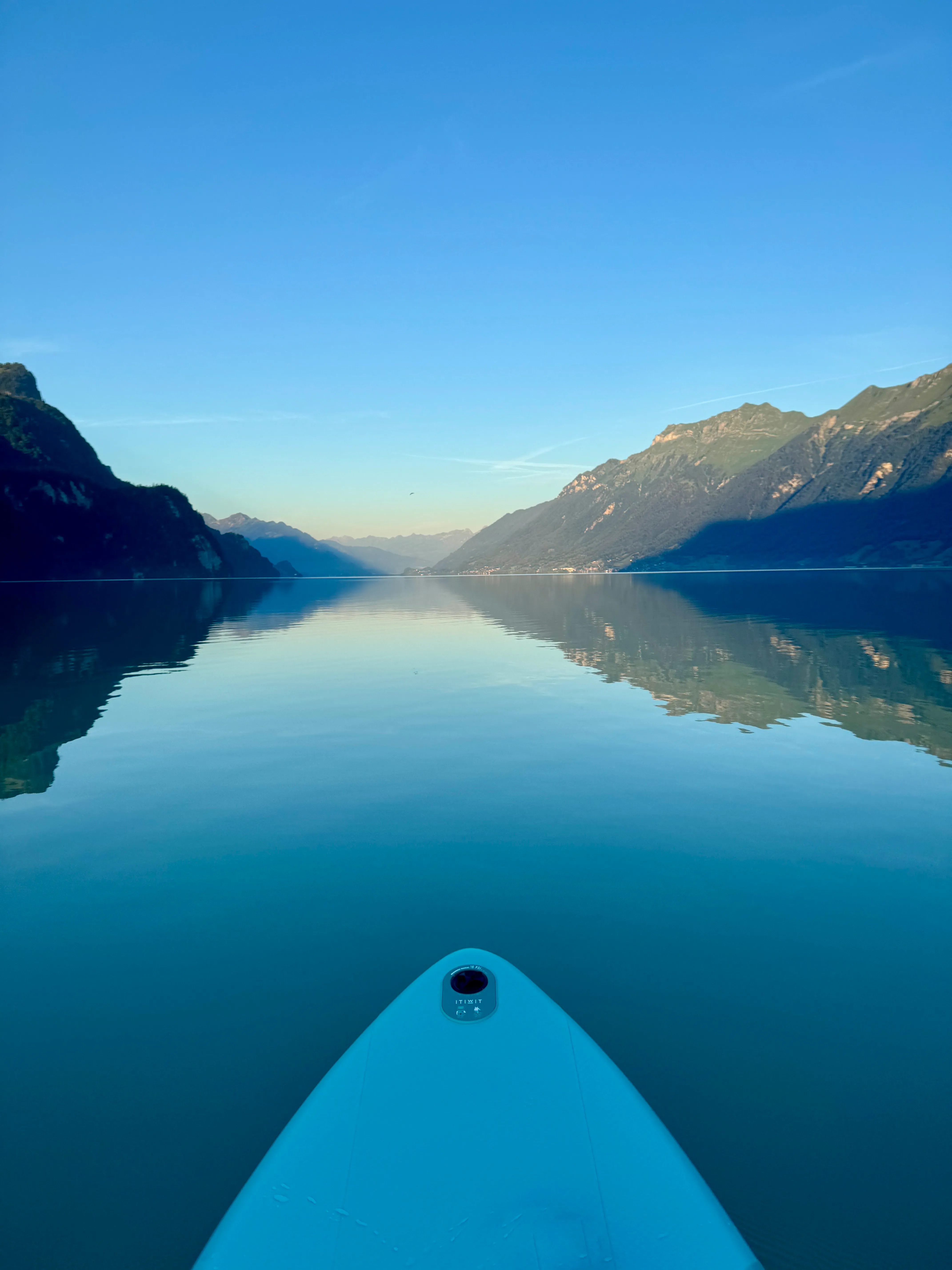
And the lake itself is one of the deepest in Switzerland, that startling glacier-fed turquoise, and warm enough to swim in by mid-summer. A paddleboard at first light, before the boats are out, is hard to beat.
Book your trip
Tours & experiences around Lake Brienz
Steam train rides, lake cruises, Giessbach Falls and more. Worth a look before you go, especially for the things that sell out in peak season.
Browse Lake Brienz tours →Affiliate link — if you book through it I may earn a small commission, at no extra cost to you.
The honest takeaway
I’ve led with the storm because it’s a good story, but I don’t want it to be the thing you take away. That was one night. The rest of the week was about as good as a trip gets — a real lake to swim in, a steam train up a mountain, walks straight from the campsite, and long evenings by the water with the van doors open. It’s honestly one of the best spots we’ve stayed, and we’d go back tomorrow. Keep half an eye on the forecast and get the awning in if the sky turns, and Brienz will look after you.