
5 Things We've Learned About Road Tripping With a Dog
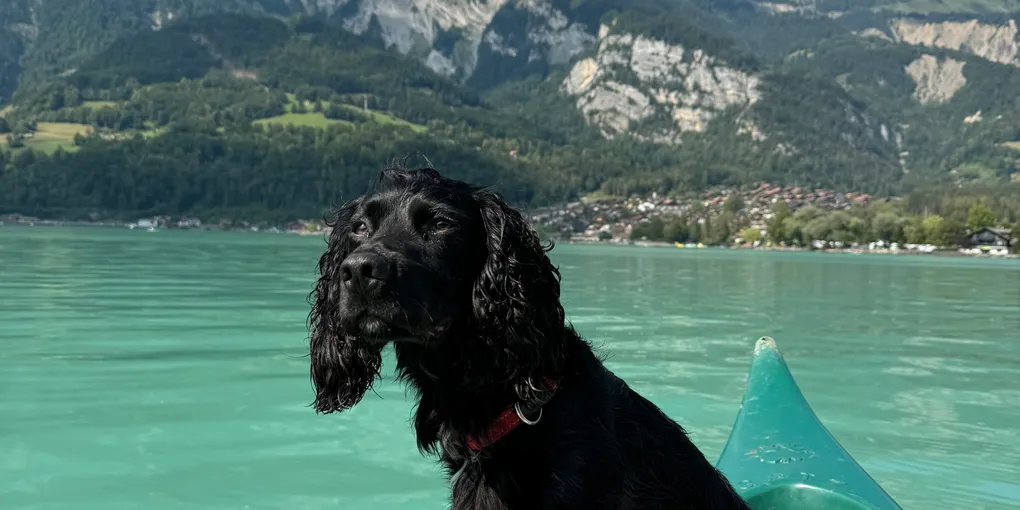
Fred is always first into the motorhome. Usually before we’ve finished loading the snacks, and always with the firm conviction that the whole trip was arranged for his benefit.
We’ve done a fair few road trips as a family now — around the UK, across Europe, the lot — most of them involving too many snacks, muddy boots and a cocker spaniel who treats every lay-by like it’s the main event. Lately a lot of people have asked us the same thing: how do you actually manage it with a dog? So here are five things we’ve learned that make it far easier — for them and for you.
1. Pack their comforts, not just the basics
The obvious stuff matters — food, water, bowls, leads, poo bags. But the thing that really settles a dog in a strange place is whatever smells of home.
A familiar blanket, their own bed, the manky toy they won’t part with — any of it turns an unfamiliar pitch into somewhere they recognise. Fred’s comfort item of choice is one of our socks (the dirtier the better). Hand him a used one at bedtime and he’s perfectly content.
The essentials worth not forgetting:
- Non-spill water bowl
- Food bowl, and enough food for the whole trip
- Lead, harness and an up-to-date ID tag or tracker
- Poo bags (more than you think)
- Vaccination paperwork and travel documents if you’re heading abroad
If you’re going into Europe, give yourself plenty of time before you leave for any jabs or tapeworm treatment. It’s not something you can sort the night before.
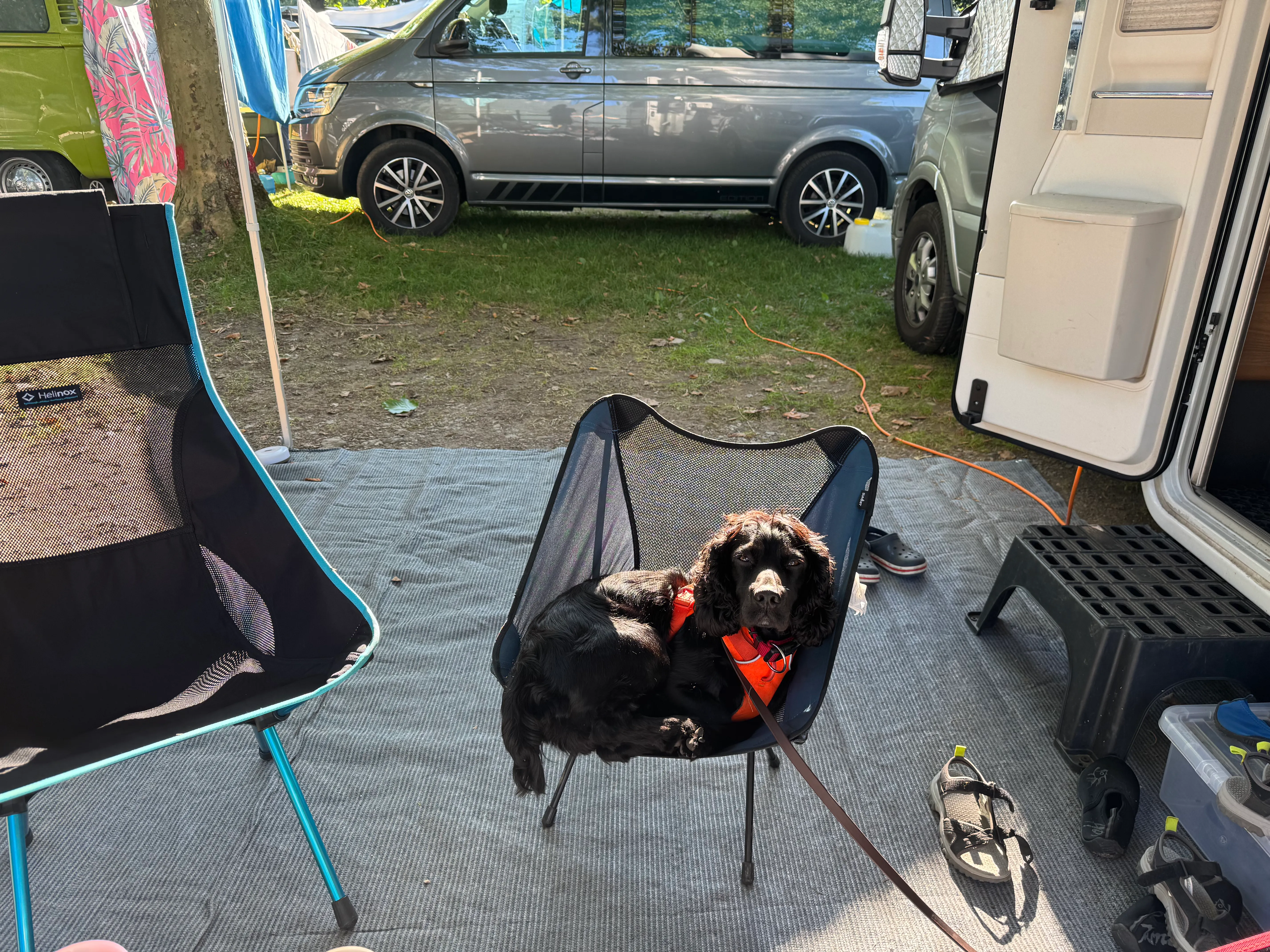
His own camping chair is not on the kit list but apparently it’s the 3 second rule!
To make life easier, we’ve put everything we never want to forget into one printable dog travel checklist. Pin it up, tick it off, and you’ll never leave home wondering what you’ve missed.
Get the free dog travel checklist
Pop your email in and we'll send the printable checklist straight to your screen. You'll also get our occasional travel inspiration — unsubscribe any time.
Thanks — your checklist is downloading now. Check your downloads folder! 🐾
2. Build the route around breaks
A road trip is exciting for us. For a dog, hours of motorway can just be long and a bit baffling.
Regular stops change everything. Ten minutes sniffing round a wood, a lake or a quiet beach resets the mood for everyone — and some of the best bits of any trip are the unplanned stops you only found because someone needed a wee.
When we plan a route now, we look for:
- Woodland walks
- Dog-friendly beaches
- Quiet picnic spots
- Somewhere open for a proper leg-stretch
3. Check campsites are actually dog friendly
“Dogs allowed” and “dog friendly” are not the same thing — that one took us a couple of trips to learn.
Some sites tolerate dogs and not much more. Others properly think about them: walking areas, a wash station, decent space nearby. Worth asking before you book:
- Are dogs allowed everywhere on site, or just certain parts?
- Is there somewhere safe to actually walk them?
- Any restrictions in peak season?
- Is the surrounding area any good for dogs?
Five minutes of checking saves a lot of standing in a car park wondering where on earth to take them.
4. Keep them safe in the vehicle
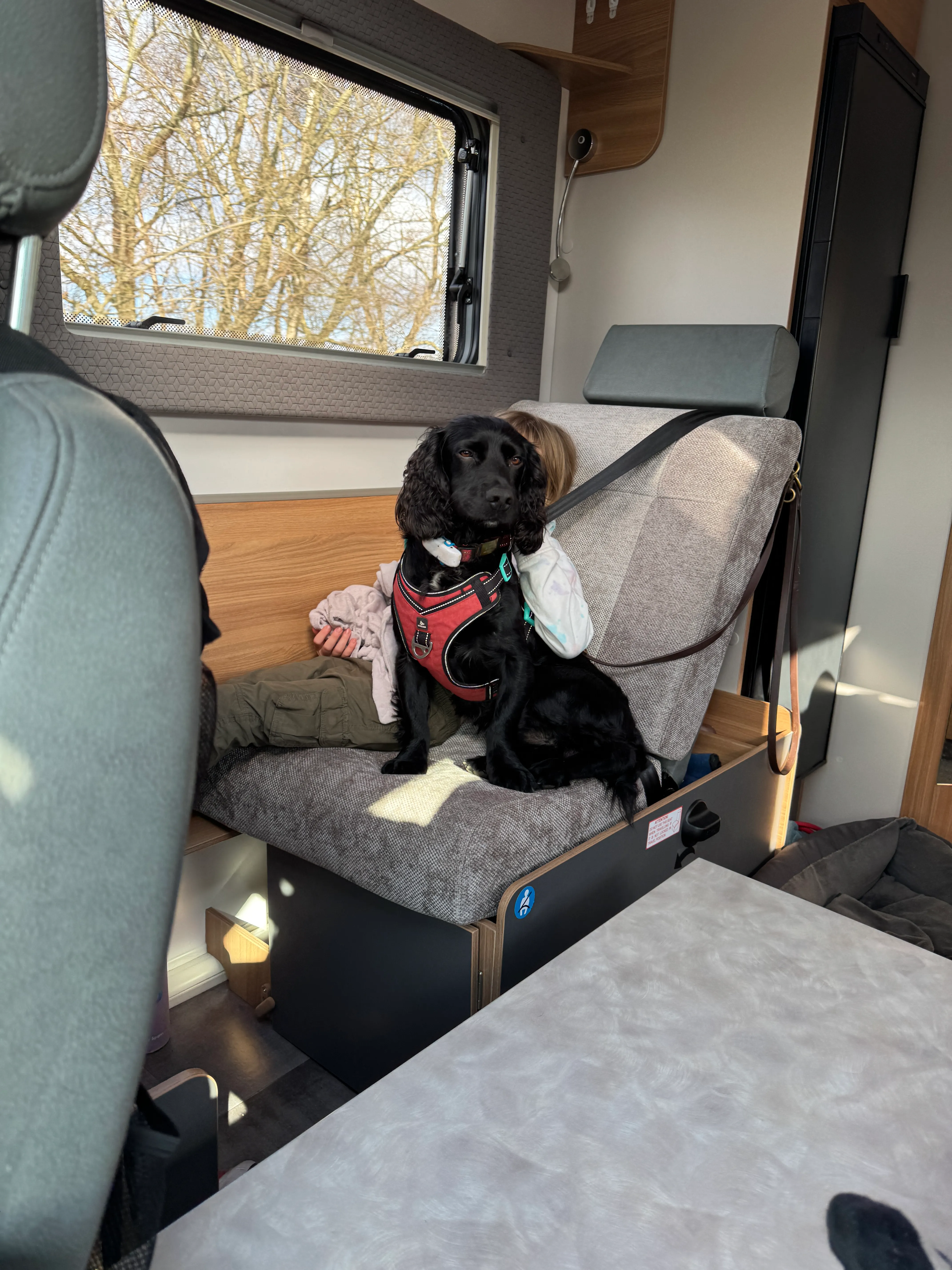
No Fred, that’s not where I mean — you’re not helping me prove this point.
Tempting as it is to let them settle wherever they fancy, a loose dog in a moving vehicle isn’t safe — for them or you. A seatbelt harness, crate or pet barrier keeps everyone in one piece if you have to brake hard.
We are very lucky that Fred is an excellent traveller. He has his travel harness on and clipped near his bed so he has enough room to stretch out but sleeps most of the way. The only time he edges towards the habitation door is when he’s signaling it’s time for a comfort break!
And the obvious one that still bears repeating: never leave them in the vehicle in very hot or very cold weather, even for a few minutes.
5. Keep a bit of routine
Dogs run on familiarity. Even when you’re moving site to site and waking up somewhere new most days, keeping meals, walks and bedtime roughly consistent helps them settle far quicker.
Fred is always happiest when the trip still feels a little predictable to him — even when we’ve genuinely no idea where we’ll be by sunset.
One useful tip for travelling through Europe, when arranging to get tapeworm treatment or paperwork sorted on the way back, it’s worth researching and getting it booked in early. One year we found ourselves spending valuable holiday time emailing several vets. Some don’t always reply straight away as it’s holiday season so it just adds unnecessary stress on your holiday. We just work out where we will be between 1 and 5 days before returning home and google vets in one of the towns we’ll be passing through. This year we are using a vet in Verdun, France which we went to last year as it’s on our route home. All the vets we’ve used for this, in France or Switzerland have been very efficient, friendly and easy to deal with.
None of it’s complicated, really. A bit of planning, their favourite sock, and most dogs take to life on the road quicker than you’d expect. Fred certainly has.
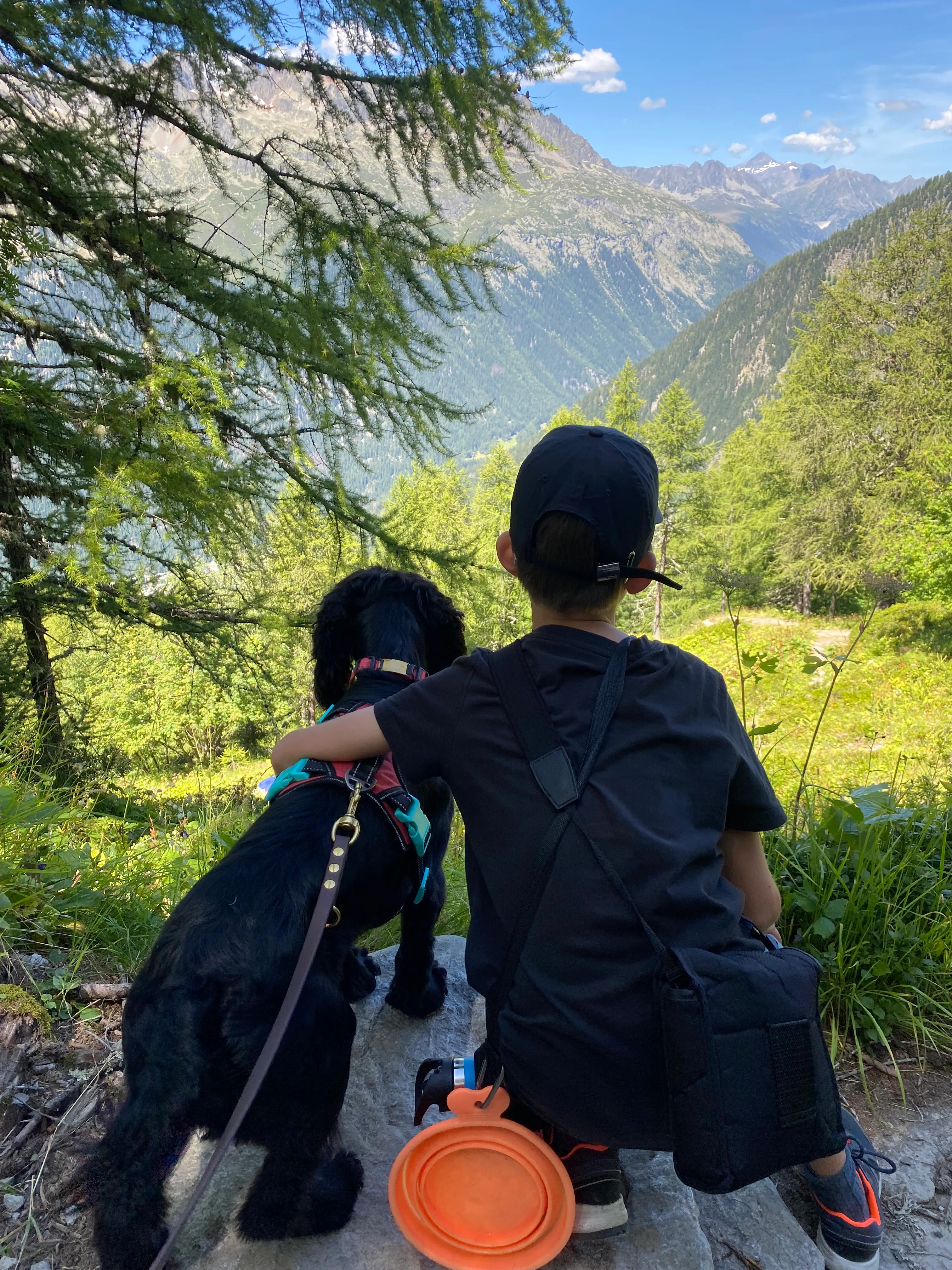
Fred and Max enjoying the view together on Mont Blanc.